

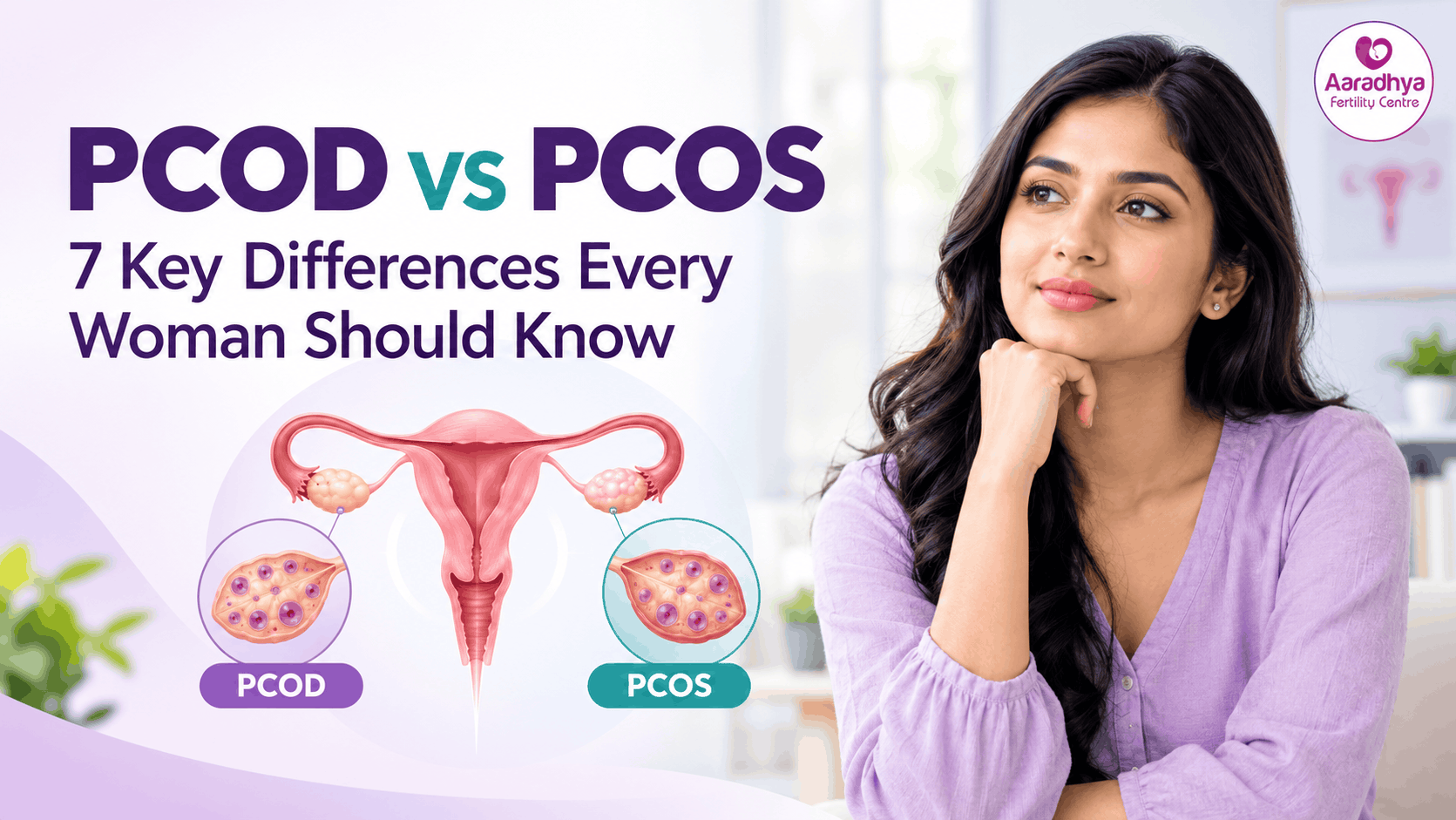
If you’ve been told you might have PCOD or PCOS, you’re probably wondering what the difference even is. Most people use the two terms like they’re interchangeable. They’re not. Both involve the ovaries and hormone disruption, but the cause, the severity, and the way each affects fertility can look quite different.
This guide walks through PCOD vs PCOS in plain language, the differences between the two, and the key symptoms that one should know about, along with how each one is diagnosed and treated.
What is PCOD?
PCOD is a syndrome that occurs when the ovaries release eggs that are immature or only partly developed. Over months and years, some of these eggs turn into small cysts that build up inside the ovary.
It’s a fairly common condition, and diet, low activity levels, and stress usually play a part. There’s some good news here too. PCOD does respond well to the lifestyle changes, and most women with it can still ovulate and even get pregnant without much trouble.
What is PCOS?
PCOS stands for Polycystic Ovary Syndrome, and it’s a bit more layered. The ovaries start producing more androgens (the hormones typically associated with male traits), and that extra androgen gets in the way of normal ovulation.
In clear terms, PCOD is mostly a reproductive issue, PCOS often comes with metabolic complications like insulin resistance. That’s part of why it’s harder to manage long term, and why it carries a higher risk for things like diabetes and heart disease down the road.
Here is a clear depiction of the key differences between PCOD and PCOS:
| Factor | PCOD | PCOS |
|---|---|---|
| Full Form | Polycystic Ovarian Disease | Polycystic Ovary Syndrome |
| Severity | Milder, usually improves with lifestyle changes | More complicated, often needs ongoing medical care |
| Egg Release | Irregular, but ovulation still happens | Frequently absent, which lowers the chance of natural conception |
| Fertility Impact | Rarely a major issue | Hormonal and metabolic factors often lead to infertility |
| Hormonal Imbalance | Mild, easier to manage | More severe, especially with high androgen levels |
| Weight Gain | Less common, usually mild | Common, and tends to settle around the abdomen |
| Associated Conditions | Rarely tied to serious health risks | Raises risk for diabetes, heart disease, and insulin resistance |
Common Symptoms of PCOD & PCOS
PCOD Symptoms
Periods often show up late or without much of a pattern. Skin can get a little oily, sometimes with mild acne, since the hormonal shifts here are on the gentler side. Weight tends to move around but stays fairly manageable. On an ultrasound, you might see multiple immature follicles, which is where the cysts come from.
PCOS Symptoms
Missed or irregular periods are common, usually because ovulation isn’t happening the way it should. Higher androgen levels can cause excess hair on the face or body, a condition called hirsutism, along with acne that’s tougher to clear up and keeps coming back. Hair thinning near the crown or front of the scalp is another sign some women notice. Weight gain around the belly is typical too, and for many women, difficulty conceiving is what eventually brings them in for PCOS treatment.
Causes and Risk Factors
PCOD Causes
Shifts in estrogen and progesterone can throw off the release of eggs. A diet heavy in processed food, paired with little physical activity, doesn’t help either. And if PCOD runs in the family, that raises the odds of developing it too.
PCOS Causes
Insulin resistance is a big one. When cells stop responding to insulin properly, the body compensates by producing more of it, along with more androgens. Those elevated androgens are what block ovulation and trigger symptoms like acne or unwanted hair growth. Genetics and excess body weight tend to make the hormonal and metabolic picture worse.
Both conditions come down to a mix of genetics, hormones, and lifestyle. PCOS just tends to bring more metabolic complexity along with it.
Diagnosis of PCOD and PCOS
Diagnosing either condition usually involves a few steps. An expert gynaecologist will always begin with your medical history, looking at menstrual patterns, weight changes, acne, and hair growth. From there, a physical exam checks things like BMI and skin or hair condition. Blood tests measure hormone levels, including testosterone, LH, FSH, and insulin, and an ultrasound scan looks for cysts and checks ovary size. A pelvic exam might also be done, mainly to rule out anything else that could be causing the symptoms.
Treatment and Management Options
Lifestyle Changes
Lifestyle changes count as the safest and the best-recommended ways to fight PCOS naturally. A balanced diet and regular exercise go a long way toward restoring hormonal balance and supporting ovulation. Even a modest weight loss, somewhere around 5 to 10 percent of body weight, can ease symptoms and bring back more regular cycles. Managing stress through yoga or meditation also helps, since lower cortisol tends to mean steadier hormones.
These habits matter because they improve insulin sensitivity, which is often at the root of the hormonal imbalance in the first place.
Medical Treatments
What treatment looks like depends on your symptoms, whether you’re trying to conceive, and how severe things are. Birth control pills are commonly used to regulate periods and cut down on acne or excess hair. The anti-androgen medications contribute to lowering male hormone levels, which helps with hirsutism and hair thinning. Metformin is often prescribed for insulin resistance, particularly in PCOS, and it can also help restore ovulation. For women planning a pregnancy, fertility treatments may be recommended, and in resistant PCOS cases, a procedure like ovarian drilling is sometimes considered, though this is rare.
Whether it’s PCOD treatment or PCOS treatment, the plan really needs to be built around the individual.
Conclusion
PCOD and PCOS aren’t the same condition wearing two different names. They differ in cause, in severity, and in how much they affect fertility. Knowing which one you’re dealing with is the first real step toward managing your hormonal health, and if you’re facing irregular cycles or fertility concerns. So, wait no longer and join hands with the most experienced and able team of Aaradhya Family, and avail the best PCOD Treatment in Vizag.
FAQs
Can PCOD turn into PCOS?
The transition doesn’t happen directly and these are two separate conditions, though untreated PCOD combined with poor lifestyle habits can sometimes make hormonal imbalance worse over time.
Which is more serious, PCOD or PCOS?
PCOS is considered to be a more serious condition due to the deeper hormonal and metabolic issues involved, plus the higher risk of diabetes and heart disease.
Can I get pregnant if I have PCOD or PCOS?
Yes, plenty of women with either condition go on to conceive, naturally or with medical support. PCOD tends to affect fertility less than PCOS does.
How is PCOD diagnosed?
The correct diagnosis is done by accessing medical history, a physical exam, blood tests, and an ultrasound to check for cysts.
Are PCOD and PCOS permanent conditions?
Both conditions are typically long-term, but the key symptoms can be managed well with the right lifestyle changes and medical care.
How can I control PCOS symptoms?
A combination of balanced eating, regular exercise, stress management, and prescribed medication usually keeps symptoms in check.
What is a good PCOD diet chart for weight loss?
Whole grains, lean protein, plenty of vegetables, and less processed sugar, spread across smaller balanced meals through the day, tends to work well.
What is the best treatment for PCOS?
It’s usually a combination approach, lifestyle changes alongside medical care like hormonal medication, insulin-sensitizing drugs, or fertility support, tailored to what you actually need.
How is PCOS diagnosis done?
The diagnosis is done through blood tests for hormone levels, an ultrasound of the ovaries, and a review of your symptoms and menstrual history.
What is meant by Type 4 PCOS?
Often known as post-pill PCOS, this type shows up after stopping birth control, when the body temporarily struggles to regulate hormones on its own.
Author Info

No Comments